Entry · Ref VF2PXBZT
Why I Rely on Trusted Writing Journals After 20 Years of Notebook Testing
- Posted
- 2026-10-18
- Last amended
- 2026-10-18
- Account
- @trustedwritingjournalsdigest
For as long as I can remember, I have kept a notebook. Not as a collector, not as a hoarder of blank pages, but as someone who needs a place to think on paper. Over two decades, I have filled hundreds of notebooks. Some were terrible. Some fell apart. A few became lifelong companions. Through all of that trial and error, I have come to depend on a short list of trusted writing journals. These are the ones I reach for when the work matters, when the words need a home that will not fight back.
I have seen the writing world change. The rise of digital tools, the promises of distraction-free apps, the endless subscription services. And still, the notebook holds. There is something about the physical act of handwriting that cannot be replaced. The scratch of a Lamy Safari on good paper, the way a Pilot G2 flows across a page, the quiet satisfaction of finishing a refill. These are not just habits. They are rituals. And the journal you choose becomes part of that ritual.
What Makes a Journal Trustworthy?
For me, a trusted writing journal has three qualities. First, the paper must be reliable. No bleeding, no feathering, no surprise show-through when you are using a wet pen. Second, the binding must hold. A notebook that loses pages after a few months is not a notebook. It is a waste of effort. Third, the design must be simple enough to get out of the way. I do not want to think about the notebook. I want to think about what I am writing.
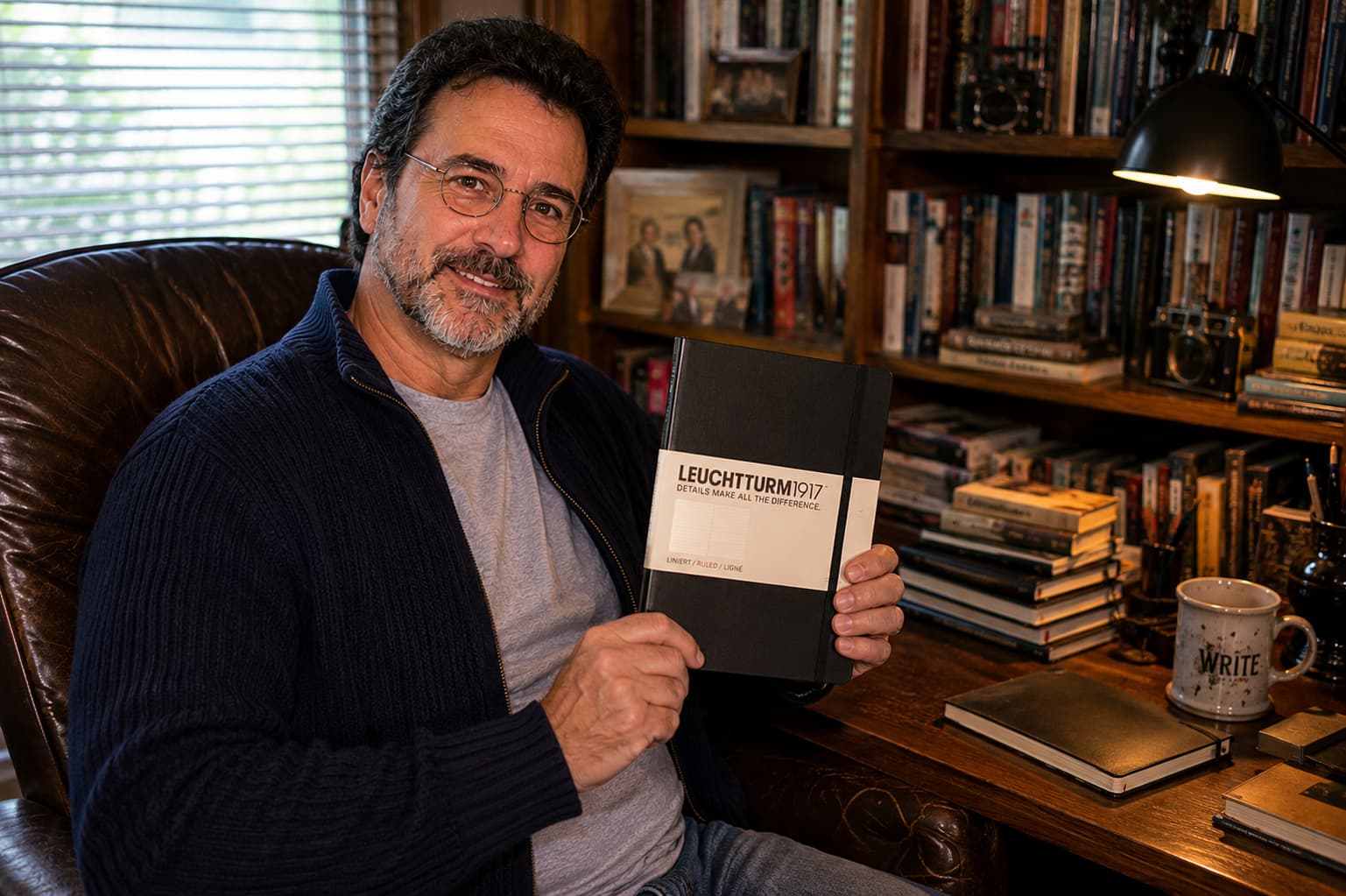
This is where brands like Moleskine and Leuchtturm1917 come in. They have earned their reputations for a reason. Moleskine notebooks have that classic feel, the rounded corners, the elastic closure, the paper that takes fountain pen ink surprisingly well if you choose the right nib. Leuchtturm1917 offers numbered pages, an index, and a lie-flat binding that makes it perfect for bullet journaling or long-form writing. Both are trusted writing journals in the truest sense. They do not try to be clever. They just work.
But I have also found that trust goes beyond brand names. It is about how a notebook fits your personal writing style. Some writers need thin pages and a flexible cover. Others want a hardbound spine and 200 pages of thick stock. I have tested both extremes, and I have learned that there is no single right answer. The best journal is the one you actually use.
The Paper That Changed Everything: Tomoe River
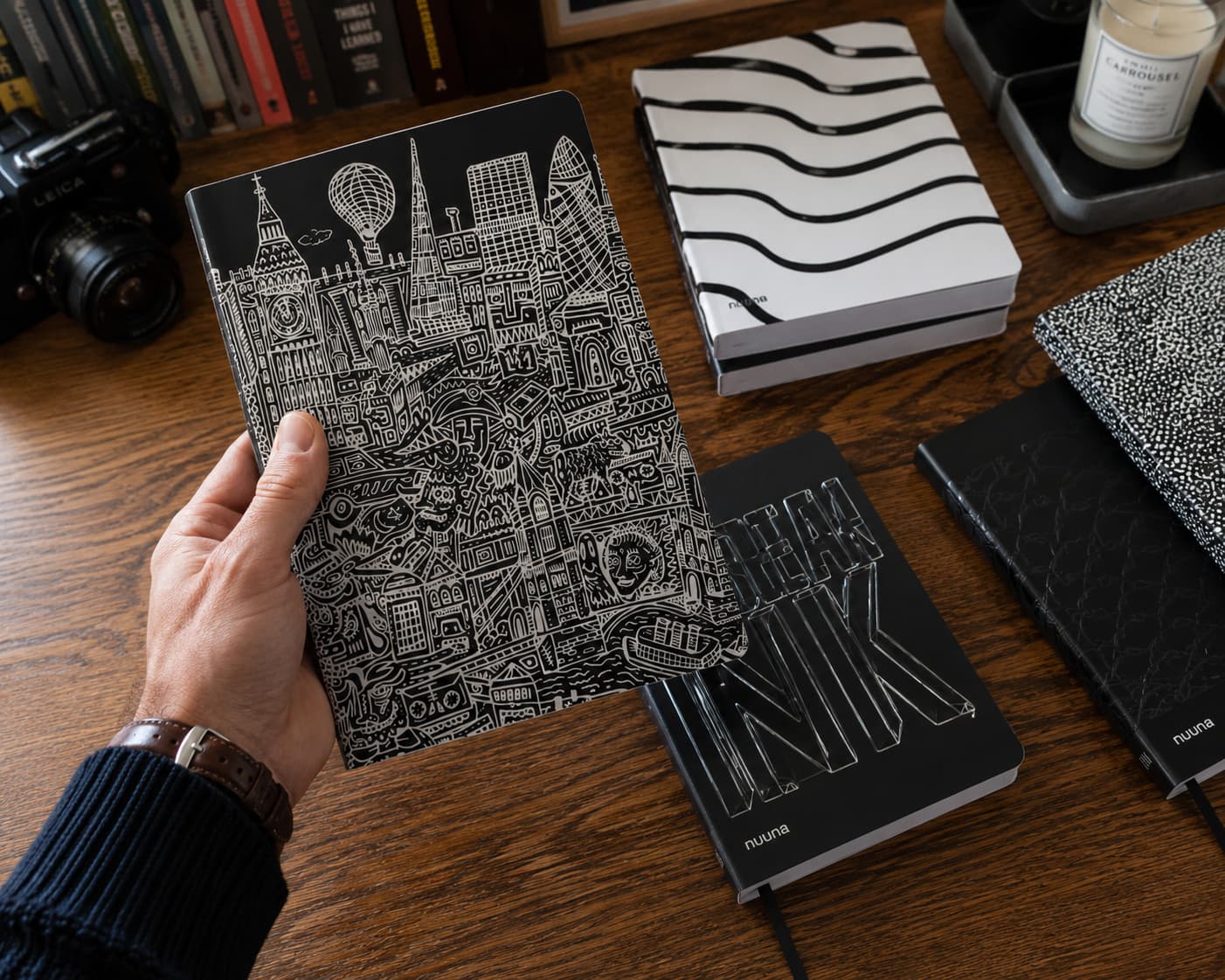
If you have never written on Tomoe River paper, you are missing one of the great pleasures of handwriting. This paper is incredibly thin, almost translucent, yet it resists ink bleed like nothing else. Fountain pens, rollerballs, even a wet brush pen behave beautifully on it. The catch is that it is delicate. You have to handle it with care. But for writers who love pen and ink, Tomoe River paper is a revelation.
Two brands that use Tomoe River paper are Midori MD and Hobonichi Techo. Midori MD notebooks have a minimalist design that appeals to purists. The paper is a light cream color, soft to the touch, and takes ink with a subtle feedback that feels deliberate. Hobonichi Techo, best known for its daily planners, uses a thinner Tomoe River stock that allows the pages to lie flat even in a small format. Both are excellent choices for journaling, especially if you like to write with fountain pens or use a variety of inks.
I have written in a Hobonichi Techo for several years now. The layout, the paper quality, the ability to see the whole week at a glance. It works for me. But I also keep a Midori MD for longer, unscripted entries. Some nights I just need to write without a structure. The Midori gives me that freedom.
When You Need Something Rugged: Field Notes
Not every writing session happens at a desk. Sometimes you need a notebook that can survive a pocket, a backpack, or a rainy day. That is where Field Notes shine. These small, staple-bound notebooks are designed to be used hard. They get dirty, the covers wear, the pages dog-ear, and that is the point. They are for notes on the go, for ideas that hit you in the middle of a walk, for sketches and lists and half-formed thoughts.
Field Notes are not ideal for long-form writing. The paper is thin and not fountain-pen friendly. But they excel at being disposable in the best sense. You fill one, you move on. They are cheap enough that you can buy a three-pack and not feel guilty about wasting a page. For quick drafts, grocery lists, or capturing a fleeting observation, they are hard to beat.
The Pen Makes a Difference
A notebook is only half the equation. The pen you use shapes the experience. I have tested dozens of pens over the years, and a few have become regulars in my rotation. The Lamy Safari is a workhorse fountain pen. It is durable, ergonomic, and accepts a wide range of nib sizes. The Pilot G2 is a reliable gel pen that writes smoothly on almost any paper. And the Uni-ball Jetstream is my go-to for ballpoint writing. It is fast, clean, and never skips.
Pair any of these with the right notebook, and the writing feels effortless. But pair them with the wrong paper, and frustration follows. I have written in notebooks where the Pilot G2 bled through three pages. I have used a Lamy Safari on paper so rough it sounded like sandpaper. Those experiences taught me that the combination matters. A trusted writing journal does not just work with one pen. It works with the pens you actually use.
Journaling Prompts and Breaking Through Writer's Block
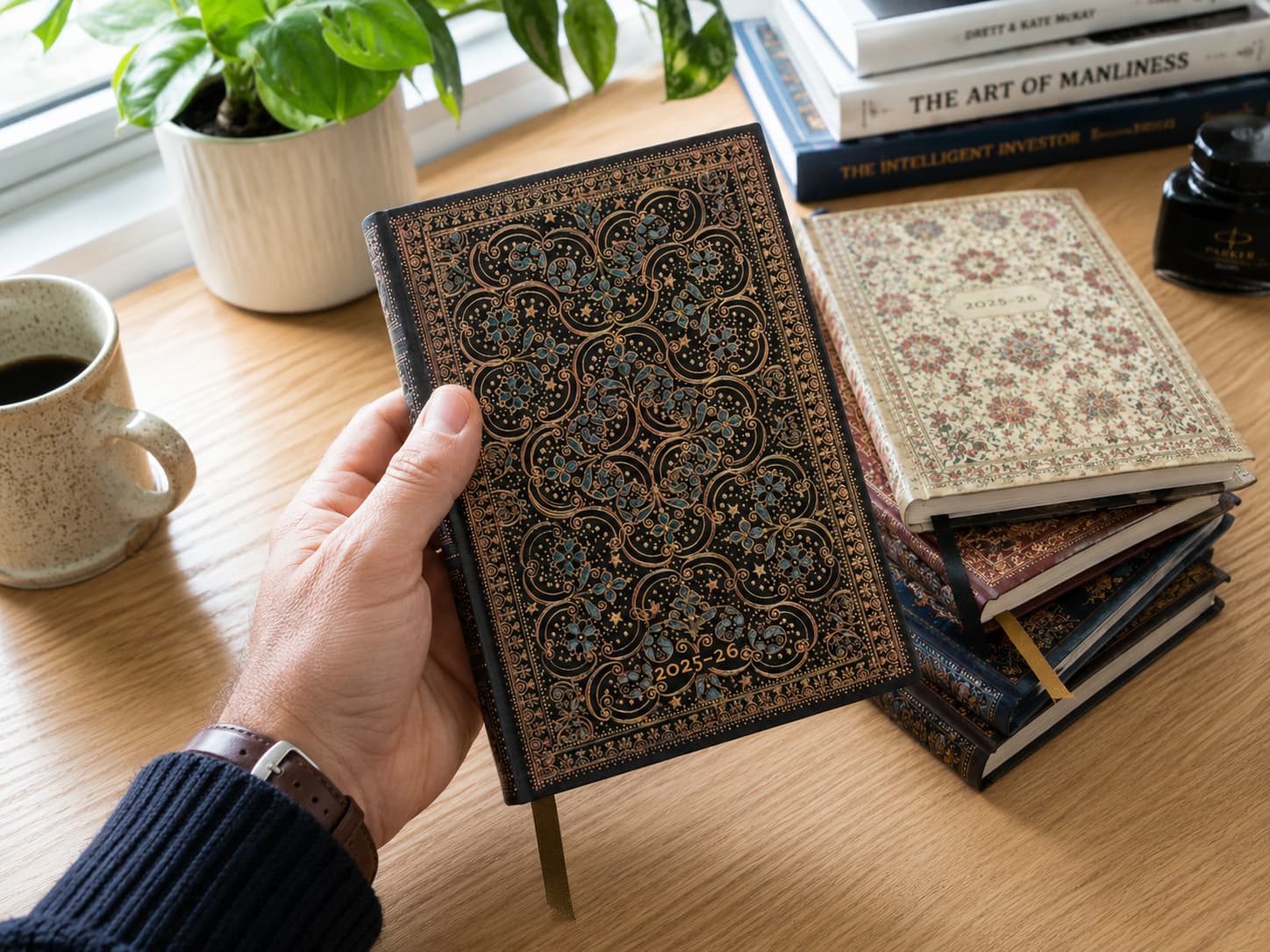
Even with the best tools, writer's block can hit. You sit down to write and nothing comes. The page stares back. This is where journaling prompts can help. Simple questions like "What did I learn today?" or "What am I avoiding?" can unlock a stream of thought. I keep a list of prompts inside the back cover of my Leuchtturm1917. When I am stuck, I flip to that list and pick one. It is not a cure, but it is a starting point.
Another resource that has helped many writers is The Artist's Way by Julia Cameron. Her concept of morning pages, three pages of longhand, stream-of-consciousness writing every morning, is a powerful tool for clearing mental clutter. I have done morning pages on and off for years. The key is consistency. You do not need to write well. You just need to write. And having a notebook that you trust makes that practice easier.
There are also notebook reviews online, on sites like Amazon and Etsy, that can give you a sense of what a notebook is really like before you buy. But I have learned to take reviews with a grain of salt. One person's favorite paper is another person's scratch pad. The only way to know if a journal works for you is to try it yourself. That is why I recommend buying a single notebook from a brand before committing to a bulk order. Test it with your pens. Write in it for a few weeks. See how it holds up.
The Art of Bullet Journaling
Bullet journaling has become a popular method for organizing tasks, notes, and goals in a single notebook. The system is simple: you use bullet points, symbols, and an index to keep everything in one place. It works well with any notebook that has a dot grid and numbered pages. Leuchtturm1917 is a favorite among bullet journalists for exactly that reason. The numbered pages and index make it easy to find past entries. The paper handles most pens well. And the size is portable without being cramped.
I have used bullet journaling on and off. It is effective, but it requires discipline. If you fall behind, the system breaks down. For that reason, I prefer a looser approach. I use a combination of daily logs and free-form journaling. The notebook serves as both a planner and a diary. It is not pretty, but it is honest. And that honesty is what makes it valuable.
Finding Your Own Trusted Writing Journals
At the end of the day, the best writing journal is the one you finish. I have seen friends buy expensive notebooks, write two pages, and abandon them. I have also seen writers fill cheap composition books with masterpieces. The tool matters, but not as much as the habit. A trusted writing journal is one that supports your habit, not one that intimidates you into silence.
If you are new to the world of quality notebooks, start with a Rhodia pad. The paper is smooth, the orange cover is distinctive, and the price is reasonable. Rhodia uses a coated paper that works well with fountain pens and gel pens alike. It is a safe bet. From there, you can explore Moleskine, Leuchtturm1917, or Midori MD. Each has a different feel. Each serves a different purpose.
I own notebooks from all of these brands. I use them for different things. My Leuchtturm1917 is for planning and long-form writing. My Midori MD is for free-form journaling and drafts. My Field Notes are for on-the-go notes and ideas. And my Hobonichi Techo is for daily reflection. Together, they form a system that works for me. But I did not build that system overnight. It took years of trial and error, of buying notebooks that looked good but wrote poorly, of abandoning half-filled journals because the paper bled or the binding cracked.
That experience is why I trust the journals I use now. They have proven themselves. They have survived long writing sessions, rough handling, and the occasional spill. They are not perfect, but they are reliable. And for a writer, reliability is everything.